
BLOG

Your customers are smarter than you think - talk to them better
We in the industry are changing priorities, and focusing much more on the way we communicate through social and how we can change the way we speak to audiences.
Marketing is all about crafting the right message for your audience. And since the dawn of the Mad Men age, there's been no limit to how we do that - until now.
With radio, TV and print saturating our daily lives, and billboards that wrap around entire buildings, we’ve been challenged to up the ante in our communications. Catchier slogans, stronger call-to-actions and even better-looking models are how we keep one step ahead.
But, as it has with every aspect of our lives, social media has arrived and disrupted the way we play the marketing game. It’s become essential, and it’s become the most significant test of our communications savvy.
I could go on about the huge benefits of social media, and why it’s an absolute must in marketing. If I did, I’d probably mention that it’s extremely cost-effective, highly engaging, boasts real-time monitoring and audience insights. But we know about all this already, which is why we’re on social (and if you’re not, you’re doing a serious disservice to your clients).
What’s far more important is the way we communicate on social and how we are changing the way we speak to audiences in 2018.
Sure, Facebook, Instagram and to some extent Twitter, offer traditional advertising opportunities. Those sponsored posts go a long way to targeting our customers and getting the right eyes on our messages.
But what about those messages?
Audiences on social aren’t game for the tag lines that work in magazines. They’re not wowed by the catchy slogan and call-to-action that works in traditional media. They’ve seen it, and they’ve seen it way more than once.
But our audience doesn’t feel the same way. They’re craving something real, something they can relate to – a marketer that speaks their language.
Be brave enough to give audiences what they want. Drop the sales and PR language, and speak to your followers like friends.
Give them a story with a beginning, middle, climax and message. Wow them by putting some heart behind the social post, and watch your audience – the kind of audience that cares about your client’s brand – grow.
When we write for social, we must remember that every word counts. It’s fleeting, but its impression lasts forever. Use the space to tell your audience something they’ll care about, share with them something they want to see, be their trusted voice and not a punter selling a product.
Talk to your audience the way you want to be talked to, and your results will start to speak for themselves.
This article was written for BizCommunity and can be found online here.

Storytelling in content: What does it really mean?
Storytelling is a buzzword all content creators have heard - but do they know what it means? We break down what storytelling means and why using it can make good content turn out great.
With a tag-line like ‘stories worth sharing’ you’d think we know a two about storytelling. And we do. At Locomedia, our passion is finding engaging and compelling ways to produce content – whether that’s an article, a press release or a 140-character tweet. And we do it really well because we use storytelling.
But what does storytelling mean?
Not unlike a tale told over a pint at the pub, storytelling means sharing with an audience an experience that moves them. And when an audience is moved, it actually alters their brain chemistry.
“Stories are powerful because they transport us into other people’s worlds and change the way our brains work and potentially change our brain chemistry,” says Paul Zaks in this interview with Yesware.com.
Zak, a neuro-economics researcher, has found that highly engaging stories elicit powerful emphatic responses by triggering the release of oxytocin, or the ‘trust hormone’.
So whether people moved to laugh, cry, wince or scream – it all counts towards powerful storytelling. But in in the content creation business, we want to move them buy.
Storytelling has become the buzzword of the marketing world. And that’s because the emotional potential Zak explains gives stories the power to achieve many of the goals content writers strive for – creating trust, building credibility and being remembered.
“People remember what they care about and bond with. When you engage listeners in a powerful, entertaining, and informative story, they remember it, and many times they ask for more,” says marketing consultant Al Lautenslager in Entrepreneur.
So what makes a good story? Look no further than the tried and true method used in a lot of kids' storybooks. Audiences (young and old) want a hero, a climax and a take-home message. But most important of all, they want the story to be real.
“Storytelling is the perfect platform to let your brand’s personality shine through. Not by selling, but via the stories you tell,” says Steve Olenski in Forbes. “Just remember your customers want to see and experience your brand’s personality. Ensure the brand is intrinsically linked to the story’s message.”
The danger in storytelling is letting the tale run away from the brand. Sometimes a story is so good the message is lost. Content creators have to strike a fine balance between creating a message that people can get swept up in, but stays true to the heart and soul of the brand.
They also have to remember to keep their target in mind. If the story isn’t crafted to resonate with a specific audience, it is likely to miss that market altogether. Content creators should always write with the perspective of the customer in mind.
Need an example? Think of the fitness industry. Rarely do these content creators push their equipment or services. Instead, they focus on the fitness journey – or the story – of their brand.
“We know staying fit and maintaining a healthy lifestyle is hard for most people, so we inspire our readers and clients with stories,” Terry Moncada of GymJunkies tells Olenski in Forbes.
“Stories of ordinary people who broke bad habits in extraordinary ways, stories of how we also sometimes feel too lazy or too busy to go to the gym. We don’t have a problem with being vulnerable and it touches our readers emotionally and kicks them into action."
And what's great about storytelling is you can use it to kicking audiences into action on nearly every platform. It works in articles, blogs, press releases and social media content. Just think of the meteoric rise of Instagram, where every picture tells a story.
The possibilities are truly endless. And now you know why we're always asking, "How can we tell your story?"

What's the point of a #hashtag on social media?
Hashtags are more than annoying # symbols clogging your social media feed. They're a powerful way for businesses to boost content, and we've got the three top tips you need to hashtag the right way.
When your mamma starts using hashtags on Facebook, you know you've reached peak saturation. And when it comes to the hashtag, you couldn't argue otherwise. Everyone - and their mamma - is using the little number symbol to highlight their social media posts. It's gotten so popular that in 2014, the word 'hashtag' was added to the Oxford English Dictionary. That's saying something.
But ironically, most hashtags aren't saying anything at all.
A surprising number of people on social media are throwing around #'s with little or no understanding of the point. While this is forgivable amongst personal users, who drop a hashtag on every second word, it's not okay for businesses.
"While social media users have readily embraced hashtags as an important way to discover new content and connect with others, many companies are still wondering whether hashtags are just a fad or are a feature that can drive revenue," says Kevin Bobowski, writing for Entrepreneur.com.
The hashtag made its debut in 2007. Since then it's become the most popular way to categorise content on social media. It creates a virtual database of content linked to a specific topic that is accessible anytime, anywhere via a simple search on a social media platform.
What does that mean? It means that when social media users interested in wine are looking for good content about wine, all they have to do is head to their favourite social media platform and search for it: #wine.
Every single post that has been tagged #wine will appear in the results. And if you're in the wine business, your content should be coming up there too.
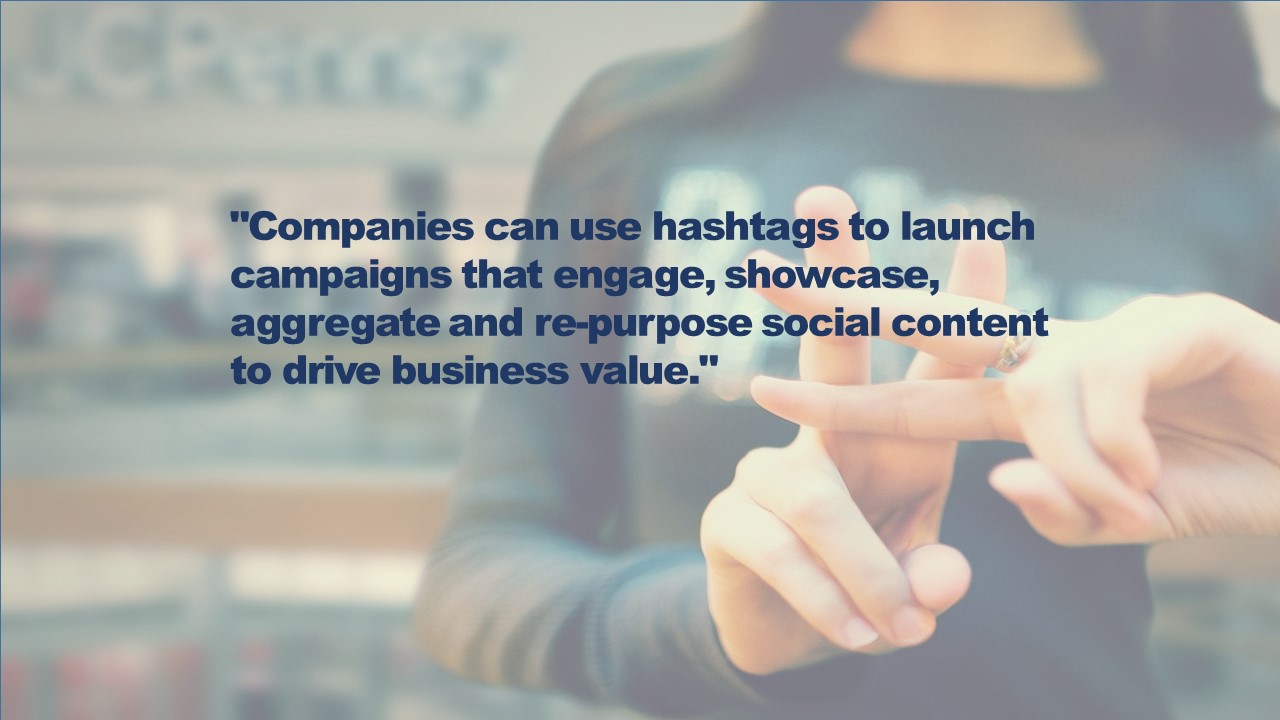
"Companies can enlist hashtags to launch complete campaigns that engage, showcase, aggregate and re-purpose social content to drive business value," says Bobowski.
But if you don't use hashtags in your posts you're being left behind. Your content, no matter how great it is, isn't getting read by dozens of social media users who could be your next customer.
While rectifying this situation may sound as easy as inserting a hashtag into your next post, think again. Serious strategy should go into your use of a hashtag ensuring that you're highlighting the right words and standing out from the many others who are hash-tagging along with you. Here are our three top tips to getting hashtags right:
Pick a keyword - and stick to it
This can be trickier than it sounds. If you're in the wine business, as mentioned earlier, it may seem legit to simply use #wine. But if you consider how many other people are using #wine in their posts, you'll quickly realise it's an over-saturated category. Instead, try finding a way to link your wine business to something more unique that relates specifically to your brand but is also relevant. For example, if you're a South African wine producer, you might choose to go with #SAwine to set yourself apart from the crowd. Whatever you choose, make sure you stick to it. Your unique hashtag should be used often and should easily fit in with the content you're posting.
Don't go overboard
Johnny Twitter-user loves a hashtag. Every #post he writes on #Twitter has a #hashtag and he #dontcare how #annoying it looks. But Johnny Twitter-user is wrong. You should absolutely be using hashtags on your social media posts - but you should absolutely not go overboard. Having too many hashtags makes content look disorganised. It can also take the focus away from your industry or business, and that can mean the people seeing your content are not the right audience. Limit your # to the most relevant one or two words in your posting. If you've got your own unique hashtag, that is usually the only one you need to use.
Make it viral
Once you've nailed down a unique hashtag, and content that works really well with it, it's time to grow. Open the hashtag up to your followers. You can do this by simply inviting your your followers to also use your hashtag too, or you can create a campaign out of it and launch a contest, give-away or experience. By encouraging users to engage with your hashtag, you're increasing the number of people who see it - and the number of people who see your brand. You're also growing the pool of content connected to your hashtag, and that gives it more integrity and credibility to those who see it on social media.

Take Five with Girl Eat World's Kamini Pather
Girl Eat World's Kamini Pather caters to a horde of hungry social media followers, and she does it in style. She dishes up to us about her favorite accounts, her #eatgram and finding success.
They say we eat with our eyes, but photos hardly do justice to how absolutely delicious our favourite dishes can be. Still, social media shows no signs of slowing down on the food-photography front. As our news feeds fill with decadent pictures of scrumptious food, we can hardly keep our tummies from grumbling or our fingers from tapping 'like.' There's a reason they call it foodporn!
Leading the local food scene on social media (and killing us with her drool-worthy #eatgram photos!) is one of our favourite online personalities, Kamini Pather. Winner of SA MasterChef 2013 and the face of her very own food and travel show Girl Eat World, she knows a thing or two about what makes good food - and how to share it with her digital audience.
We were thrilled with the opportunity to sit down with Kamini and chat with her about all things social media - including her stellar career and how she manages to make our mouths water on Instagram.
Kamini Pather's Girl Eat World debuted on Food Network in May 2015.
You have a really active social media presence. What inspires you to keep it up?
People inspire me to keep going. When I get feedback about how my life has allowed people to live differently or explore their worlds more, that makes me feel as though the time spent on creating digital content is worth it.
Why is it important for a personal brand to be on social media?
It’s direct access to your audience. I have felt powerful when I have interacted with brands (personal or other) through social media. It has made me feel as though I was closing the degrees of separation.
Who are some of your favorite social media personalities?
I am obsessed with Instagram and have many people that I adore. @manmakecoffee is a beautifully curated coffee-lifestyle account. The Pretty Blog is a locally produced profile that started as a wedding-specific blog, but has ventured into lifestyle and food. Rene Redzepi is the chef at NOMA, the number one restaurant in the world. That is a bucket list destination for me. His IG account documents the crazy produce that he finds in Denmark and Australia, and how he uses it.
You also really active on Snapchat. What do you like about it?
I enjoy the way Snapchat groups snap from popular world events like Easter, or Holi in India or the bombings in Brussels. It’s a very real view of how people live. I am obsessed with Dj Khaled on Snapchat. I can hear my brain cells popping but he is the train wreck that you can’t tear your eyes away from.
What's the most surprising thing that's happened to you because of social media?
I get offered jobs via social media. I am developing a book and the publisher who propositioned me with this idea has been following me on IG and contacted me. My job hadn’t been invented until recently and that’s all thanks to social media and the digital world.
We love your #eatgram! What tips do you have for amateur food photographers on Instagram?
Look at other IGers and their style of photography. See how they use props, cropping and above all else, LIGHT. Do not use the flash for any photograph. Not any.
How important is it to engage with your audience on social media?
That’s the point, is it not? No engagement means no followers.

What customers want: Mobile responsive web design
Mobile users now exceed desktop users. But businesses still haven't picked up on how important it is to have a website that meets mobile customers' needs.
Holed up at Truth Coffee shop, the entrepreneur's haven in Cape Town, I was seated across from a pair of business women talking shop. Their topic of conversation? The website of a small business owner who was pitching to their company. And what they had to say stopped me typing mid-sentence.
“Businesswoman #1: She sounded really clued-in and I liked what she had to offer. So in the meeting, I brought up her website on my phone. And oh my god.
Business woman #2: What? Was it horrible?
Business woman #1: It was all over the place! It was obviously not designed for phones. I mean, how can you work with someone whose website isn’t even mobile responsive?”
Wow. Pretty harsh, I thought. But then again, this is the mobile-age. Everything on the web is being accessed by phone, and if you're not prepared for that, you're not going to succeed in business.
More than 20% of Google searches are now performed on a mobile device, says this Huffington Post article by John Rampton, and mobile users now exceed desktop users. But businesses still haven't picked up on the mobile responsive trend.
Why is that? Well, one reason is a lot of websites were built before or at the start of the smartphone revolution. And let's be honest, it costs a lot of money to design and launch a website. For a small business, the idea of doing it again can be a huge financial headache.
But the truth is, you're more likely to damage your business if you don't upgrade, says Rampton.
"Whenever someone arrives on your mobile website and is frustrated, or doesn’t see the content that they are searching for immediately, there’s a 61% chance they will leave and head to another website," he says.
"And 48% of users stated that when a site doesn’t function on their mobile device, it makes them feel that the company does not care for their business."
Put simply, a customer who can easily navigate your website on their smartphone or tablet is going to stick with you. If they can't, you're going to lose that customer. Or in the case of the small business those women were chatting about, you're going to lose a big client.
Mobile responsive is an industry term that pretty much means "designed for digital." It means that a website looks as pretty on an iPhone and tablet screen as it does in the Chrome browser. And more importantly, it means a website is just as easy to use.
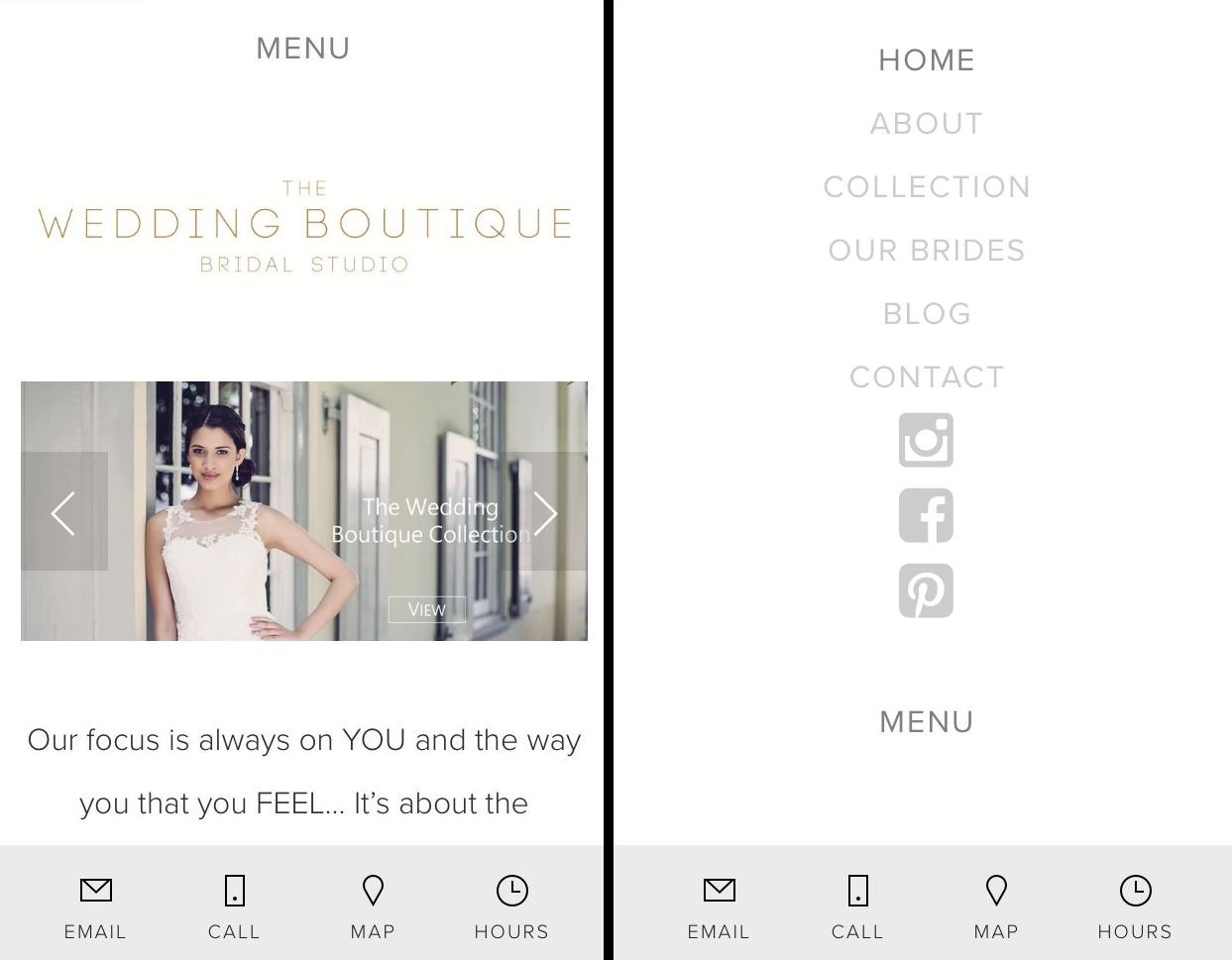
Take, for example, the mobile responsive website we built for The Wedding Boutique. The homepage is attractive and fits well into the mobile view. The menu bar is clear and easy to navigate, and it's easy to click to call, email or get directions and opening hours.
Now, look at this example of non-mobile responsive design. The homepage is crowded, difficult to read and the font is incredibly small (ie. not designed for mobile readers). Also, the menu bars are far too small to work easily at the tap of a finger.
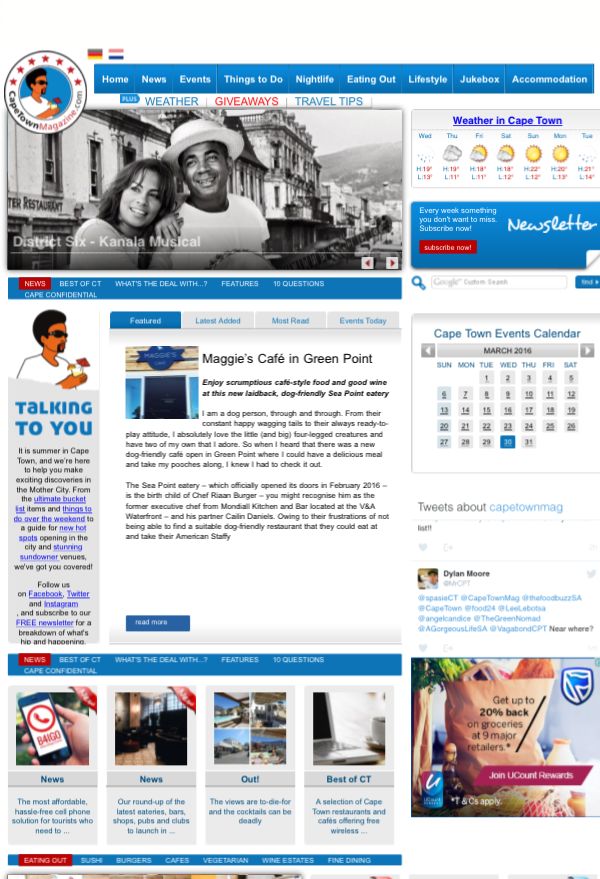
Taking these two examples into account, it's pretty easy to see why mobile responsiveness matters. What's more, this digital-savvy design actually translates into results, according to Rampton.
"I redesigned my personal company site to have a responsive design," he says. "My mobile conversion (people contacting me) tripled overnight as well as people coming to my site doubled."
Customers and potential clients want to see that you're prepared for them - whether they're coming to you on a computer, a smartphone or a tablet. Is your website ready?

Why your PR agency should hire journalists
Journalists who join a PR agency face a lot of flack for going to the 'dark side'. But we think they deserve more credit for the skills they bring to the PR industry.
Most journalists who join a PR agency face a lot of flack for going over to the 'dark side'. It's understandable. The majority of journos think of PR reps as a bunch of well-paid voices on the other line, calling when deadline is at its tightest, with stories that don't match their beats.
But a job in PR is much more nuanced than the newsroom stereotype. Not enough credit is given to the balancing act reps play as they juggle editorial calendars, a bulging Rolodex, content creation and countless demanding clients - and journalists.
That's why we tend to think the only people who can truly handle the PR job are journalists themselves.
That's right. The very people who've moaned about us at their previous job are the same people we hire at our PR agency. Because we recognise that the people who are most likely to turn a press release into front page news, are people who know the newsroom.
And we're not the only ones. Former reporter Michael Molcher, who's now Press Officer at Leeds City Council tells PR Week, "Journalists make the best PR professionals."
"They have 'news sense' - they know what journalists want and tailor their press releases accordingly," he says.
What Molcher means is that journalists working in PR know what editors want, and they know that all editors aren't created equal. Rather than send a general release to everyone, they'll most likely tailor their pitch to each editor's specific beat. This not only increases the likelihood of repeat coverage, but it also earns respect.
These PR pros also know how important it is to package a story. You see, it's not enough just to get an editor hooked on a pitch. You also have to have all the elements ready to go - on their timeline.
Instead of just emailing off a press release, journalists in PR have interviews, images and multi-media components at the ready. The sooner these can be sent, the better the chances of a story getting covered. Especially if the editor asks for something now - as in 'now now' - because journalists also know about the tender area of deadline.
Having a sensitivity to the newsroom crunch is extremely important in PR. It means knowing when is the right time to call - and what are the right things to say. Keeping things short and to the point are keys to keeping a busy editor on your side.
Of course, journalists aren't the only ones who can play the PR game. There are a number of outstanding PR reps who inspire us without having newsroom experience. But as we're founded by a journalist, we can't help but have a special feeling for others who've gone to the dark side. And you should too.

A commitment-phobe's guide to blogging
Every website we design features a blog page. It's become an unspoken must-have for brands who believe they’ve gotta have it. But is that true? We’re here to tell you that no, it’s not.
Nearly every new website we design features a blog page. It's become an unspoken must-have for brands, who blindly believe they’ve gotta have it. But is that true?
We’re here to tell you that no, it’s not.
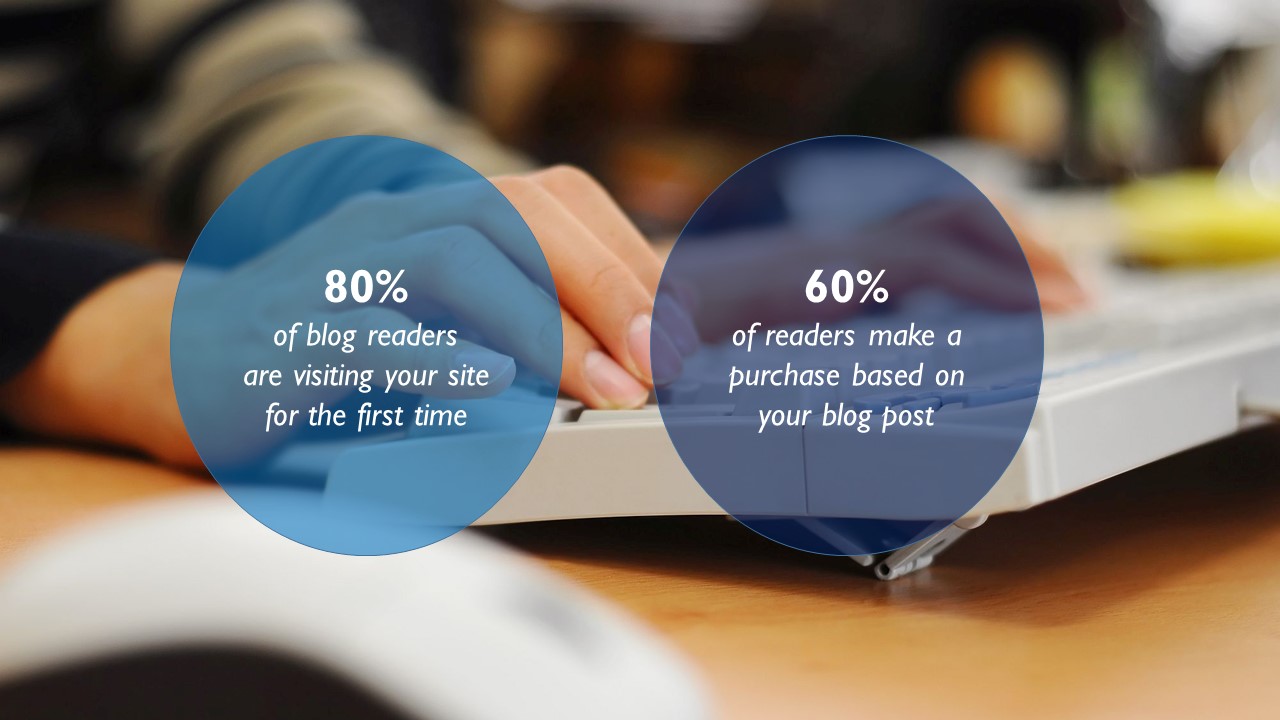
There’s no doubt there are real perks to having a blog. According to Social Media Today, it can have a measurable impact on brand awareness. More than 80% of all blog traffic consists of new visitors who are learning about your brand for the first time – these are new customers.
But tapping into those benefits takes commitment. Having a blog requires that you actually blog. And while most people realise this, they don’t realise the consequences of not blogging.
There are two common scenarios here. One is where the blog launches with regular content, and then tapers off until the posts start coming erratically – maybe one week, two weeks, even months apart. The second is where the blog launches empty, and stays that way – you never posted anything.
An erratic or empty blog seems harmless, but it actually says a lot about your brand. And none of it is good. It says you didn’t think your strategy through, and it says you aren’t committed to managing your time or your audience.
Think about how you feel when you click on a competitor or brand’s blog and see their last post was July 2014. Doesn’t make them very credible does it?
The same applies to you. But it’s so easy not to fall into this trap. The secret is launching your blog with a solid plan that focuses on your content, your audience and your goals.
Once you’ve committed (that ugly word again!), it takes no time for the hard work to pay off and the rewards to pour in. More than 60% of readers make a purchase based on the blog post, says Social Media Today.
So before you start your blog – or ask us to build it into your website – check out our top three secrets for blog success:
Content creators
You’ve got a business to run, you probably don’t have time to sit at the computer and write. That’s where content creators come in. These are people who write for a living, and can produce the quality content that’s going to make your blog stand out. Sure, you’ve got to invest in bloggers and actually pay them, but when they’re helping you grow your customer base without adding to your workload, the investment is well worth it.
Audience research
Good content creators aren’t going to write whatever comes into their heads. They’re going to do their homework. Figuring out who your customers are, and what they want to read, is the first step they’ll take to creating your blog. By spending the time on audience research, your bloggers will zero-in on the topics, tone and format that your audience wants – and that attracts new readers.
Consistency
If content is King, then consistency is Queen. Putting out quality blog content on a regular basis is going to make it clear to your audience that you mean business. Statistics show that after 20-30 blog posts, readers are hooked. And they’ll keep coming back for more – because you keep posting more. As the frequency of a visitor increases, so does the likelihood that they’ll become a customer and advocate of your brand. And that’s the bottom line you’ll be looking for.

Instagram SA's fastest growing #socialmedia platform
Growing to over 2.6 million SA users in 2015, Instagram is a hive of potential new customers that need to hear your brand story.
Not on Instagram? It may be time to change that. The photo-sharing platform has more than doubled its user base in the past year, according to the South African Social Media Landscape 2016 study.
Growing from 1.1 million users in 2014 to over 2.6 million in 2015, Instagram's a veritable hive of potential new customers that need to hear your brand story.
"As brands become more comfortable with specific social networks, they become far more effective at using them as marketing and positioning platforms," says Fuseware's Mike Wronski. "Instagram is already the big winner among users. Brands want to tap into that enthusiasm."
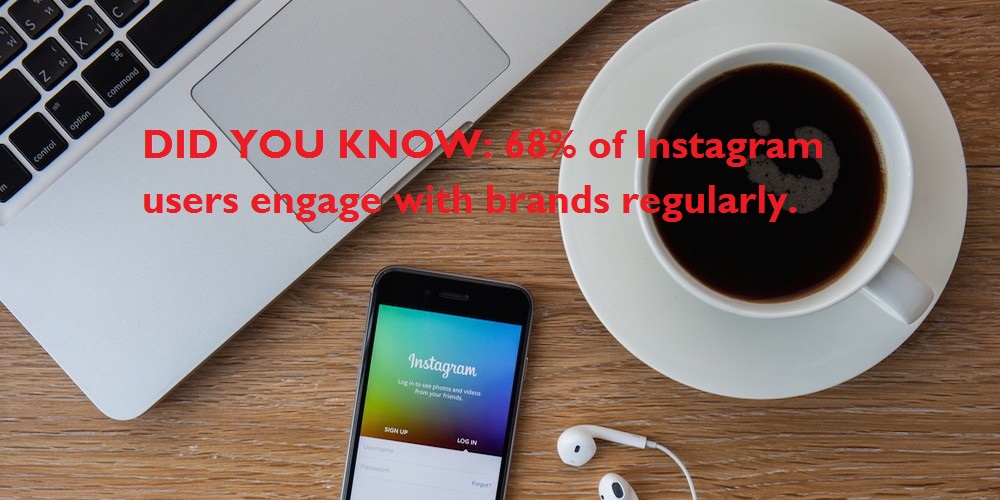
Instagram may not rank as SA's number one social platform, but it is the most engaging. According to data from Social Media Today, “Instagram has 58 times more engagement per follower than Facebook.”
That means Instagram users are more likely to interact with your content. And the more people like, follow and comment - the more attention they're paying paying to your brand and your story.
Still not convinced? Some companies think their info is way too boring to be on Instagram, or that it simply wouldn't benefit business bottom lines. They would be wrong.
Cool photos are possible to capture in every industry. All you have to do is point, click and let the pictures do the talking for you. Before you know it, you'll increase your brand reach and your potential client base.
According to World Wide Worx, 24% of companies not using Instagram say they plan to in the coming year. Here are our top three reasons why you should join them:
Create a customer bond
Imagery can be intimate. Sharing pictures of your company's progress gives clients an inside glimpse of your business and the people who are behind it. Whether it's a new project, new client or even a new offering on the cantine menu, this is one of the best ways to show the online sphere what a day in your office looks like.
Highlight your portfolio
Showcasing your company's work opens up doors for growing a customer base and for increasing productivity. A snap of a completed work or a big-time campaign in action shows off the standard and quality of what your company produces. That's guaranteed to impress customers, and may even entice other brands to reach out with collaboration opportunities.
Showcase your employees
A happy business needs happy employees. Instagram offers a number of opportunities to put the people behind your business in the spotlight. Think of it as an online version of the 'employee of the month' campaign. Posting a pic of a job well done leaves staff feeling motivated and satisfied. Pubic recognition also shows clients that your employees matter to you.
You won't BELIEVE what experts say about good content!
Actually, you will. Because that headline has nothing to do with what this article is about. But it has everything to do with something called clickbait.
Actually, you will. Because that headline has nothing to do with what this article is about. But it has everything to do with something called clickbait.
Clickbait is the most talked-about social media gimmick going. It's a tactic headline writers use to get people to click on a link regardless of whether or not that headline has anything to do with the story.
It's one of the many ways to get content to stand out from the information overload that is the internet. And when we say there's a lot of content online, we're not kidding. Every day two million blog posts, 294 billion emails and over 800 thousand hours of video are created.
With that much choice, it's no wonder sneaky tricks are getting used. But there’s a price. According to journalism lecturer Charles King from the Cape Peninsula University of Technology, it will cost you your audience.
"Without good content on your blog, website, or social media platform, visitors will quickly bounce out of there and be on their way on to the next site, with little chance of ever returning," he says.
While it seem a whole lot easier to write a clickbait headline than produce good content, it’s actually easier than it sounds. All you need is a solid plan that identifies your content goals and matches your words with your expected outcomes.
"If your goal is to create high-quality and thought leadership-driving content, then consider raising your game rather than opting for tactics," says King.
"Strive to create content that’s original, engaging, valuable and compelling. While this will take time and expertise, it will stand out from the mostly mundane ocean of so-called ‘content’ that exists online."
Good content also needs to be packaged well. Don’t skimp on including high-quality images, vibrant video and social media posts that attract the target audience.
"Without extraordinary social media content, nobody will consider sharing, re-tweeting, or liking what you have produced," says King. "That means you will never be able to build your brand or your online reputation."
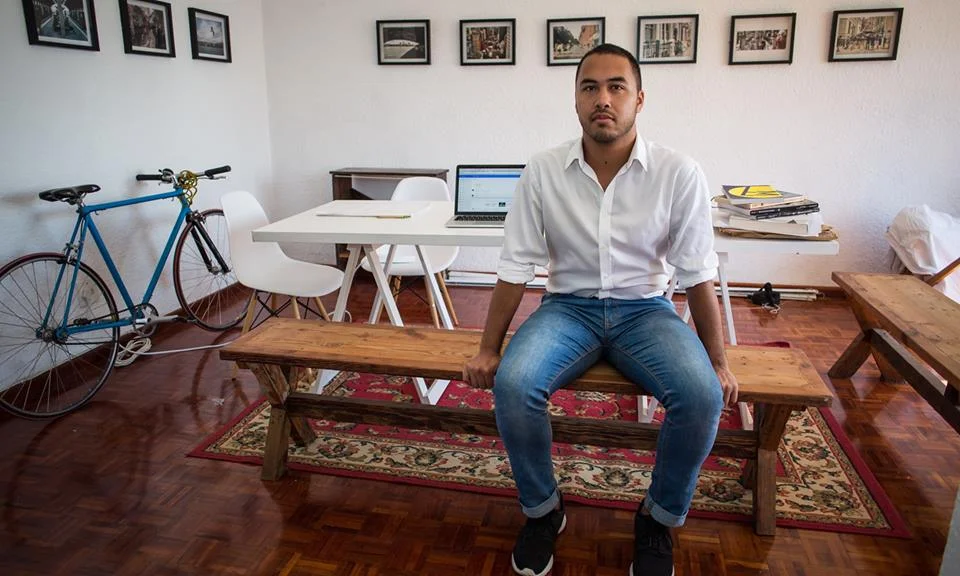
Take Five with Future Cape Town's Rashiq Fataar
If you could ask a content creator five questions about social media, what would they be? We've got our list. We sit down with Future Cape Town founder Rashiq Fataar and get the social changemaker's answers.
How can a Twitter account turn you into a local expert? Ask Rashiq Fataar. He's the founder of Future Cape Town, a platform for open dialogue about urban development, and one of the most valuable commenters in the field. His views are featured in everything from Wallpaper mag, to Cape Talk radio and the Guardian newspaper. But it all started with a Twitter handle.
Rashiq took to Twitter to voice his passion on urban development in Cape Town. Now, FCT has over 80,000 followers and a vibrant FB page. Part of that growth is thanks to the incredible amount of engagement Rashiq supports in his online community. No Tweet is left unanswered, no DM unopened, and there's a healthy amount of expertly written content coming out of the FCT blog. We watch inspired as FCT (and Rashiq's celeb status) continues to grow, along with sister sites for Johannesburg, Lagos and London. Meanwhile, we ask Rashiq the five social media questions we want to ask everyone.

Rashiq Fataar is the founder of NPO Future Cape Town.
Who is your biggest inspiration on the internet?
Over the last year, our consulting and research work on various public space projects and interventions has been a very exciting period, both in Cape Town and Lagos. Most of our inspiration on the internet is drawn form firms like Architecture 00, Studio Gang and Assemble, but also advocacy organisations like the Design Trust for Public Space (with a great new website), the Municipal Arts Society and non-profits working in the place-making area like the Nevicata project in Milan.
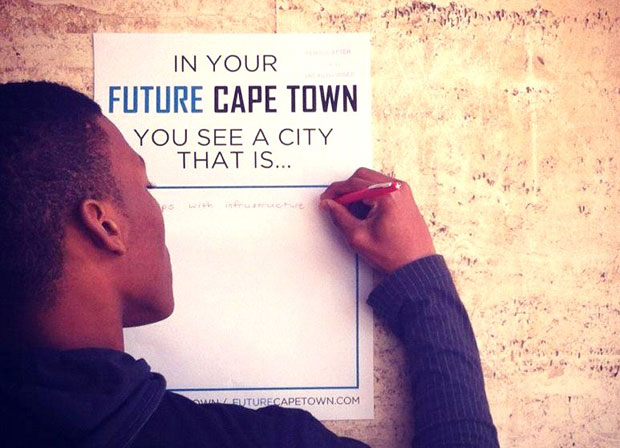
Future Cape Town is a platform for open dialogue about urban development.
When was the last time you read good content online?
I enjoy interview articles or interview-based content where leaders in urbanism speak more freely. For example, this interview in 2014 with Indy Johar, or this article about a new form of police station which makes daunting topics in our field more accessible to the public.
For heavier reading, I enjoy the beautiful and effortless writing of Wouter Vanstiphout, for example this essay in Harvard Design Magazine called Consensus Terrorism. The style of the whole magazine, not in a PDF or "online magazine" format, is really functional and easy to browse.
In the morning, I prefer to listen to The Globalist on Monocle Radio, and every few months I go back to our website and re-read our content, and think, "Hey, that's a pretty good piece."
Which is your your favourite social media platform?
I think previously it was Twitter outright, but Instagram is easier after a long day, and of course more visual. Facebook is growing on me, mainly because it connects we with great friends doing wonderful work around the world.
What is your biggest social media pet peeve?
Poor spelling and grammar, or poorly timed scheduled posts or tweets.
If you could have a Twitter Q&A with one person living or dead - who would it be?
Margaret Thatcher or Oscar Niemeyer.

Can you start a movement with a Hashtag?
From #paybackthemoney to #feesmustfall, hashtags are dominating local social media. We look at the significance of hashtag movements and how media makers use and abuse them.
Over the last couple of weeks #paybackthemoney has been dominating South African media. The idea behind a hashtag movement doesn’t come as a surprise to us in the business. Hashtags create awareness and trends, especially when they are about something relevant to a wide community.
Not too long ago #FeesMustFall was also all over the media. With the resulting pulling together of the student community, that online movement could be deemed successful. Considering this, we wonder, how relevant are hashtags in starting a movement? Do we need social media trends to pull us together over causes that are important, or are these #movements for the armchair activists while the real changemakers are on the streets?

Signia advertisements piggyback on the trending political hashtag movement.
Of course, hashtags aren't just used for politics. They're also used - and abused - for marketing, philanthropic messages and just plain nonsense (#hashtagbloodyeverything). But what is especially interesting is that when a hashtag finally becomes a significant trend, it is immediately seized upon by such users, and they go overboard. For example, the recent #InvestmentFeesMustFall campaign from Signia.
When social media users piggyback on a trending hashtag, and use it for their own disconnected means, it damages the original message. But does that damage the movement?
We have lots of questions. And in our search for answers, we spoke to Kaylynn Palm a journalist from Independent Newspapers about hashtags and their significance.
Can you start a movement with a hashtag?
Hashtags have become part of our daily lives and are used frequently, specifically by users of Twitter. Hashtags are powerful tools as they enable people to easily search and track conversations on Twitter and share their opinions or ideas on a subject. So, yes you can start a movement with a hashtag.
What is the significance of a hashtag?
A hashtag group and categorise tweets by keyword. As a journalist, you can use this tool and to shape and enhance news stories. You could use the hashtag to find people who are talking about a certain topics, and it allows people to find tweets.
Are people abusing the #movement?
I think that most people understand the purpose of hashtags on Twitter. But there are people who abuse the hashtag by not putting the message into context. This might confuse people. Then there are people who hashtag sentences such as #idontunderstandthepresident, and that is very annoying and abusive.
How can you benefit from hashtags?
As a journalist, I am able to generate story ideas and add people’s views to stories.
Is there a downside to using hashtags?
Once you’ve posted your message with a hashtag, and the information is incorrect or harmful, you might just get into trouble and this can damage your reputation.
Are hashtags the best way to draw attention to current news?
Yes, it’s one way of catching people’s attention. People spend lots of time on social media and are inquisitive, so why not hashtag? It’s an easy and cheap way of getting them to read and view content.
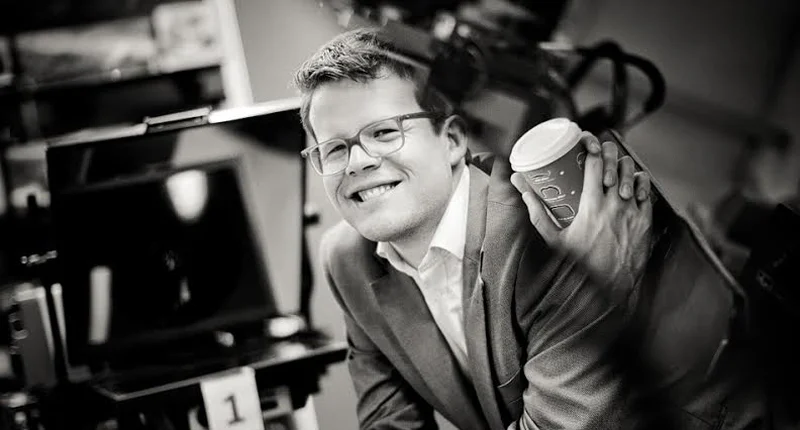
Take Five with TRT World news' André-Pierre du Plessis
If you could ask a content creator five questions about social media, what would they be? We've got our list. We sit down with TRT World news' André-Pierre du Plessis and get the journalist's answers.
When it comes to content, there are very few people we're inspired by more than André-Pierre du Plessis. Known to his friends as "Appel" or simply AP, he's a media maverick in every sense of the phrase. Whether he's reporting for Bloomberg, on air for Smile FM or producing TV for Turkish news channel TRT World, he captures what's news, and why it's newsworthy, in all the content he creates.
With a CV like his, it's impossible to keep up with all the amazing work AP does. But that's okay, because there's Facebook. And Twitter. And Instagram. AP's all over social media. With perfectly crafted posts and rapid-fire responses, we can't help but be inspired by his ability to manage media online. Coupled with his offline media savvy, he's a reminder that content creators can indeed do it all. At least we can try. Meanwhile, we ask André-Pierre the five social media questions we want to ask everyone.
Who is your biggest inspiration on the internet?
My 60-something year-old aunt in Mauritius whose use of Facebook reminds me of those first few awkward years on the platform back when privacy was still a thing and nobody could see the stupid statuses we added to the "is" that followed our names. She writes things on Facebook she either does subconsciously, or of herself being made fun of by the owner of whatever internet café she frequents on the tiny Indian Ocean island. She'd constantly comments on her own post with "did I write this? I have no memory of it".
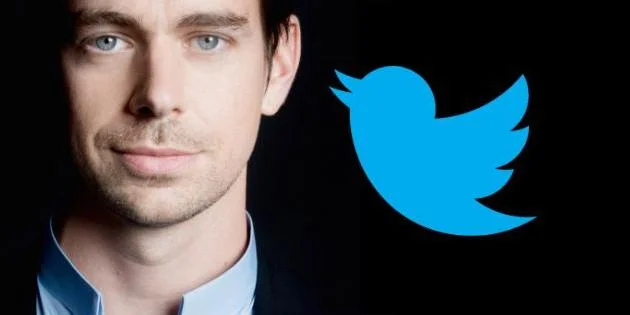
Twitter co-founder Jack Dorsey is an inspiration for all social media users.
When was the last time you read really good content online?
I really love The New York Times and their extensive attempts at drawing readers across the world to their site. I'm a news nut, so anything that's researched thoroughly and written beautifully attracts me and that's what NYT get right.
Which is your favourite social media platform?
Twitter. Because Jack Dorsey.
What is your biggest social media pet peeve?
Those quotes in silly fonts on nature-like backgrounds. Please stop.
If you could have a Twitter Q&A with one person living or dead - who would it be?
My 60-something aunt. If this is what she's like on Facebook she'll be a roar on Twitter.

Why social behaviour matters for businesses
Social media benefits businesses that use it to build a relationship with customers. According to social innovator Rich Simmonds, that relationship has very little to do with social savvy, and everything to do with respect.
Does being on social media benefit businesses? Sure it does. But the fact you’re online doesn’t guarantee success. What matters is how you use social to build a relationship with your customers. And according to social innovator Rich Simmonds, that relationship has very little to do with social media savvy, and everything to do with respect.

“Business has had the advantage of controlling the customer relationship for many years, but this arrogance is eroding away to the point where real connections are all that matter,” Simmonds says.
“This can be likened to the rich arrogant husband who thinks he has all the control because he has the money and his partner should simply listen. When she wins 10 million dollars in the lottery, do they still have a relationship?”
For Simmonds, the customer-business balance is a special one that hinges on respect. “It’s important for businesses to remember that social media consists of two words - social and media,” he explains.
“Social is what we are as human animals, we want to connect and we have a need to be recognised,” says Simmonds. “Media is a disruptive force which has no regard for you. Its aim is to interrupt and get your attention, much like a rude person who wants to talk before you have finished talking.”
When putting ‘social’ and ‘media’ together, Simmonds says it is important to keep respect at the forefront – one of the reasons why your word choice matters on social media. “Life is about relationships and if we use social media to be rude and disregard others, it is simply media and there is nothing social about that.”
A Cape Town-based public speaker and changemaker, Simmonds makes it his habit to study the intricacies of social relations. Many of his observations can have huge benefits for those trying to build an online relationship with customers.
We asked Simmonds to give us five tips for businesses on social media:
- As yourself, ‘What is the advantage for the customer?’ Don’t think about how you can con them into falling for a so-called ‘great deal’, rather put value in the proposition you are going to communicate.
- Are you listening to what the customer is saying and what they are not saying? Listen with your heart and if you cannot listen with your heart, employ people who are clever enough to do so. They will save your company.
- Connect with people! Spend part of your day connecting meaningfully with someone new, and in a year you’ll have 365 new connections.
- Use the strengths within your organisation and utilise different personality types. The culture of the people within the company is important. Allow this culture to influence your community and the world.
- Express gratitude and thank people who are part of your business daily. This applies to the internal customers who work for you and the external customers who use your service or product.

Rich Simmonds is a Cape Town-based public speaker, social innovator and changemaker.

What to do before you live tweet
When you think about live tweeting it sounds easy, right? Just grab your phone and go! Well, there's actually much more to it than that. In fact, there are a few very important factors that come into play when preparing to live tweet.
We've already shared tips on how to live tweet, but it's also important to know the basics of what it takes to prepare for live tweeting from an event.
When you think about live tweeting it sounds easy, right? Just grab your phone and go! Well, there's actually much more to it than that. In fact, there are a few very important factors that come into play when preparing to live tweet.
On the night of the event, there are about a dozen things that could possibly go wrong and the last thing that you need is to be disorganised. It’s important to have your ducks in a row and be very well informed and prepared - It will make your job so much easier!
To tell the truth, there is actually only one thing you must do before you go out and live tweet: RESEARCH: This is probably the most vital and important factor in the prep for live tweeting. First, you need to make sure you are fully aware of the 'who's who' that will be attending. Make sure that you follow them on Twitter and Instagram well in advance, and maybe even drop them a ‘shout out’ or a #FF to gain some exposure. These tweets should mention something about the event and tag them. This helps create hype around the event, and it helps you familiarise yourself with Twitter handles and relevant hashtags.
Trust us, this is all going to be very useful when you go live, as you won't have time to scramble through Twitter searching for people's information. You can simply snap a pic of them, write a your tweet, tag and POST! It’s as simple as that.
Some advice: Personalised tweets are always a hit. Make the person you are tweeting about feel special and engage with them. Stiff and boring tweets never make the cut. If you are looking for favourites and retweets, spice it up and create that conversation!
Taking this info into account, you'll see right away how easy and efficient things become on the evening of a live tweet event. And what a pleasure it can become. You won’t even realise that you are working, because you've simplified things for yourself so well!

Inspired Series: Cape Town Tourism's Rob Peters
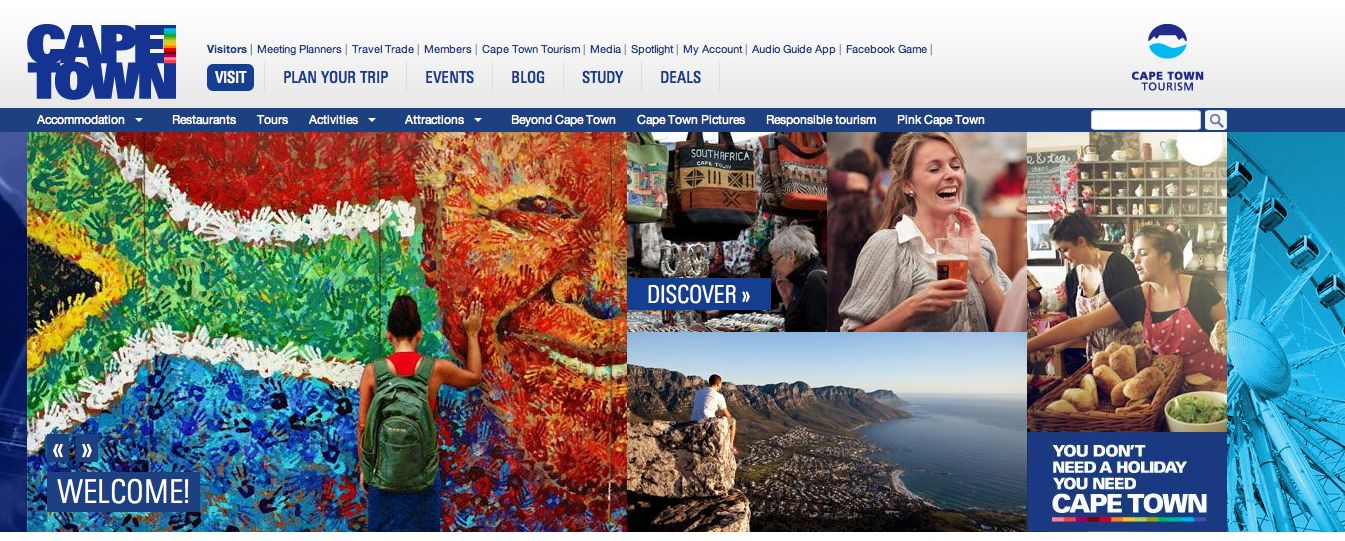
There are many content creators out there who inspire us. So, we've decided to put them in the spotlight. This week we profile Cape Town Tourism's online writer Rob Peters.
Writing for intense projects like a mobile app or a major city's tourism guide can mean long hours and lots of hard work. But a good team can make it all worthwhile, and that's definitely true when you're working with Cape Town Tourism's Rob Peters.
We worked with Rob on Cape Town Tourism's first-ever mobile app, and the 2016 Visitors' Guide. Both projects had tight deadlines and moments of stress, but he was a great team player. We are inspired by his easy-going attitude and ability to pump out well-written content. We look forward to working with him again on the new Hello Weekend project, but first, we ask Rob the five social media questions we want to ask everyone.

When he's not writing for Cape Town Tourism, Rob is hitting the trails in Cape Town.
Who is your biggest inspiration on the internet? Why?
Brandon Stanton, the man behind Humans of New York. What started out as a hobby has turned into something that goes beyond social media, because he has begun to use it to drive his humanitarian work. The account – across all his platforms – works well as a storytelling device, but it's much more than that. Through the people he connects with, he is starting to bring difficult but important stories to the world. His series on refugees, in particular, was brilliant.
When was the last time you read really good content online?
That’s a tough one, because I read so much online! One that really stuck with me was a photo essay on the #FeesMustFall movement. The images were shot and captioned by one of the students taking part and covered a lot of the protest action, including the skirmish with police at parliament. It was a fantastic piece of ‘civilian journalism’ and really brought home the gravity of what was happening.
Which is your your favourite social media platform?
Instagram. Despite the fact that I have a strong editorial background, I love the visuals. A picture really is worth a thousand words and it's the perfect platform to promote travel and adventure, two areas I'm most interested in at the moment. It’s also one of the fastest growing platforms, and I genuinely believe we have yet to see its real potential for storytelling. It’s also where I discovered HONY.
What is your biggest social media pet peeve?
How vapid it can become. Social media can be so powerful, but it seems at times to be flooded with selfies, shots of lunch and holiday bragging. Although, to be fair, I am guilty of this myself (though, not the selfies…)
If you could have a Twitter Q&A with one person living or dead - who would it be?
My gran. She settled in Africa in the early 1920s and had some epic stories to tell. I always wanted to help write her memoirs, but she passed away when I was a youngster. It would be cool to get the lowdown on her life during that time and to find out how much the continent has changed since the time she first arrived. I know I am only allowed one, but it would be great to chat to William Shakespeare as well, if only to get his opinion on the current state of literature and how we communicate now. I think he would be pretty stoked to know that he is still so popular, but might be a little disturbed by how some of his work has been re-imagined!

Why research is important before you start social media
There's a lot more to running a professional business account on social media than posting selfies and your political views. And one important thing you've got to do is your homework.
People tend to assume that social media is easy. You've got a personal Facebook page, right? How hard can it be to run a business page? Well, it's harder than you think. There's a lot more to running a professional business account on social media than posting selfies and your political views. And one important thing you've got to do is your homework.

Research is an important part of nailing your business's social media presence. Understanding what content works where, when to post and how to drive engagement aren't skills you get on your personal page. To help steer you in the right direction, we suggest you do your homework before you launch your business on social media.
In fact, the first thing you've got to do is get to know your audience. Any good social media manager will conduct focused research on your business' target audience online. Questions to start asking include: Is your audience on social media? What are their favourite platforms? How do they engage?
It's easy to forget to ask yourself these questions, but they are vital. Let me paint a picture to better illustrate this. You have an established dental practice. It's been running for many years now, and your patients are mainly of the older generation or regulars you've known for years. You're looking to grow.
Your practice is on Facebook, Twitter and has a website. and you're posting regular content. In return, you're seeing great engagement on Facebook and traffic to your website, but only a handful of followers on Twitter.
What's the problem? Well, you probably haven't looked hard enough at your audience. If you did, you might find that they don't use Twitter, or they don't use it to find information you're putting out there.
That's not to say that your dental practice - or any business for that matter - should shy away from the Twitterverse. In fact, I highly suggest news aggregators, trend setters and business owners with big personalities get stuck in. But for many small businesses, it just doesn't generate ROI.
You've got to be critical of social media the same way you're critical of advertisement in newspapers, flyers and on radio. Just as taking out an ad in the right magazine is important, so is devoting time and resources to the right social media platform. If you do that, you're guaranteed to get the results you seek.
Inspired Series: Marketing Maverick Kerry Redelinghuys
There are many content creators out there who inspire us. So, we've decided to put them in the spotlight. This week we profile passionate PR professional Kerry Redelinghuys.
As the marketing and PR manager for Mainstream Village and Malls, you'd think Kerry Redelinghuys would have her hands full. And she does! But not so full that she can't spend her time getting involved in passion projects that show off her talents, and support good causes.
Kerry has launched the online presence for Gaven Sinclair, a crazy/inspiring man on a mission to cycle from Cape Town to Cairo for the Red Cross. The catch? He's supported solely on the kindness of strangers. So, Kerry has made sure that we all have a chance to show him kindness, and shared his story - and ways we can support - on social media. It doesn't get more inspirational than that. Get yourself on Gaven Pedals and show him some love. Meanwhile, we've asked Kerry the five social media questions we want to ask everyone.

Kerry was born and raised in Pretoria and moved to Cape Town 7 years ago
Who is your biggest inspiration on the internet?
My biggest inspiration is also a project I am busy on called Cape to Cairo for the Red Cross. Gaven Sinclair in currently cycling to Cairo from Cape Town to raise money for the Red Cross. He is doing the trip completely solo (without a support vehicle) and if that is not challenging enough, he is also doing it with absolutely no money and surviving purely on the kindness and generosity of others (that takes guts). Myself and a friend have very recently taken control of his social media as he needs to concentrate of the journey ahead. It is really an incredible thing that he is doing and I want to help to communicate this to the public.
When was the last time you read really good content online?
I love that information is so freely available. But with all that 'good' comes the 'bad' and sometimes one can get soaked up in sifting through tons of time-wasting drivel. Personally, I have a short attention span and tend to bore easily so I like short bursts of logical information. But my biggest love is human connection, so I would have to say that I love Humans of New York. I love the commentary. It's so interesting to see other peoples opinions and reactions to stories and generally the comments are so positive and uplifting.
Support Gaven as he pedals from Cape to Cairo for the Red Cross.
Which is your your favourite social media platform?
I think all social media has its pros and cons and specific platforms lend themselves to specific needs. Its important to figure out who your audience is and what you are trying communicate/achieve and then take it from there. Personally, I absolutely love both Instagram and Facebook because they both give me the opportunity to connect with people far and wide but also it has a personal feel to it and makes it easy to open conversation and engage.
What is your biggest social media pet peeve?
Sharing horror images of abused children and animals to 'raise awareness'. I find this to be massively counter productive and really does NOTHING to help the cause, the constant stream of shocking images also just desensitizes people to the harsh reality. Does this whole "share this post if you are against animal abuse" actually help in any way? If you want to help then you need to actually get involved and help, sharing a picture does not do this.
If you could have a Twitter Q&A with one person living or dead - who would it be?
I know this is a controversial one but...Jesus. Now THAT would be epic! Also, Theodor Seuss Geisel (AKA Dr. Seuss)

Which content goes where on social media?
There's a fine line between which content belongs on which social media platforms. To help you wrap your head around what belongs where, we've put together this snapshot guide for posting content
All content is not made alike, especially when it comes to social media. Very often we don’t realise there is a very fine line between which content belongs where on each social platform.
What works well on Facebook, may not get any attention on Twitter. And Instagram, well that's a whole new social ball game. To help you wrap your head around what content belongs where, we've put together this snapshot guide for posting content. Using the examples of Facebook, Twitter and Instagram – they’re the most well-known, after all – we'll compare which type of content more or less belongs on each platform.
Facebook
Facebook is like a micro-blog that's ideal for content with a slightly ‘heavier’ message. Facebook allows unlimited characters, which means you can express your opinion, or question and defend yourself all at once. But that doesn't mean you should write everything! Posts should still be short, snappy and meaningful.
Imagery really matters on Facebook, and new video features (we're loving the new insta-play feature!) make it easy to put the most dynamic content forward. Your audience will generally spend more time scrolling through content on Facebook compared to other social media. Give them a reason to stay on your page longer.
Posts that ignite debates, ask heavy-hitting questions, or take stories into depth work best on Facebook. But don’t forget to engage on your own newsfeed – and leave comments! That helps other users see you and your brand's personality better than if you simply ‘like’ something.
Twitter
Twitter is all about pace. It’s a non-stop network, and content is literally handed to you as it comes. Although Twitter can also act as a micro-blog, your audience will scroll through their feed much faster than on Facebook.
With Twitter, you need to be extremely creative in your wording because if it is boring, your audience will literally scroll right past your tweet. The 140-character limit is a challenge (until it changes, that is!), but it’s an great reminder that you need to use your words wisely and get straight to the point.
Content on Twitter should be snappy and include great imagery. You should be engaging with your followers by asking questions, joining debates and replying to Tweets as fast as possible. Use hashtags to highlight relevant and trending topics, but don’t overdo it. That said, there’s nothing wrong with jumping on the #FF bandwagon!
Instagram
Instagram has brought a whole new dimension to social media, and wise brands have jumped on board. This photo-based network puts the emphasis on personal stories and helps you really connect to your audience.
Instagram works best when brands showcase what’s new, what’s on the horizon and everything in between. Employee of the month – snap a picture of her! New client – take a group selfie! Show your audience an insider’s view and watch your relationship grow without having to post a single word – images do the talking.
Of course, a few handy apps and filters help boost the quality of your images, but no one needs to know what goes on behind the scenes. The biggest challenge on Instagram is remembering what works, and that means keeping those after-hours images offline!
Inspired Series: Super Social Media’s Rachel von Merveldt
There are many content creators out there who inspire us. So, we've decided to put them in the spotlight. This week we profile Rachel von Merveldt, the mastermind behind Super Social Media.
If you're the senior planner for a big-name brand like Harrods (hello £2 billion annual turnover!), then you know a thing or two about business. But that's just half of the planning, analytics and strategy experience Rachel von Merveldt has built in the past 12 years in the biz. Now, she shares that knowledge one-on-one with clients through her new venture Super Social Media.
Rachel launched Super Social Media earlier this year to help businesses adapt to new technologies. Taking the leap from big-time corporate to intimate consultant isn't easy, and we're inspired by Rachel's passion and ability. She's a role model for all of us female #entrepreneurs, and we know there's more on the horizon for her. But first, Rachel answers the five social media questions we want to ask everyone.

Rachel shares over a decade of experience with her clients.
Who is your biggest inspiration on the internet? Why?
Maria Popova, the woman behind Brain Pickings. She's turned a weekly email to seven friends into a readership of over five million. She is creative and knowledgeable, finding most of her material offline from which she extracts amazing insights. She does all the hard work for you and delivers it in an easy to digest format. You are always left feeling as thought you have learnt something important and meaningful.
When was the last time you read really good content online?
I may have to revert back to Brain Pickings here! Its well-researched, well-written and it’s unlikely you will find anything similar to it on the internet. As Maria herself says, most of the content published on online is designed to be dead within hours, while she tries to find and write about timeless topics.
Which is your favourite social media platform?
If I had to choose one I’d have to go for Instagram. Being a big photography fan, it’s the perfect place to get my fix of stunning photography as well as keep up-to-date with people and brands that I follow. Instagram is all about visual storytelling and inspires creativity, which is one of the reasons that I love it.
What is your biggest social media pet peeve?
I have a few pet peeves! Being tagged in posts or photos that have nothing to do with me, junk content that is only meant to bait search engines as opposed to offer value to readers and mundane status updates that mean nothing to anyone reading them.
If you could have a Twitter Q&A with one person living or dead - who would it be?
Nelson Mandela. He was a remarkable man with so much wisdom, positivity and vision, who did so much for our country. A Q&A with him would be such an honour.
Tips for live Tweeting like a pro
We sent our editor Jesé to live Tweet from the #SALingerie Fashion Show at Canal Walk in Cape Town. She shares her tips and tricks on how to live tweet like a pro.
I don’t think people quite know how much work and effort go into live tweeting. It's a must-do part of the job, for everything from press conferences, launches and all the events in-between. Live-tweeting sounds easy, but it usually means your hands end up being full - literally! But when everything comes together, all the chaos and madness makes it all worth it.
We recently sent our editor Jesé to attend the #SALingerie Fashion Show at Canal Walk to live tweet the event. She was extremely excited, as it was her very first time dominating the Twitterverse. She tells all about her experience - and the massive reward she got out of it.
Jesé looking calm and collected before she starts live tweeting for the first time!
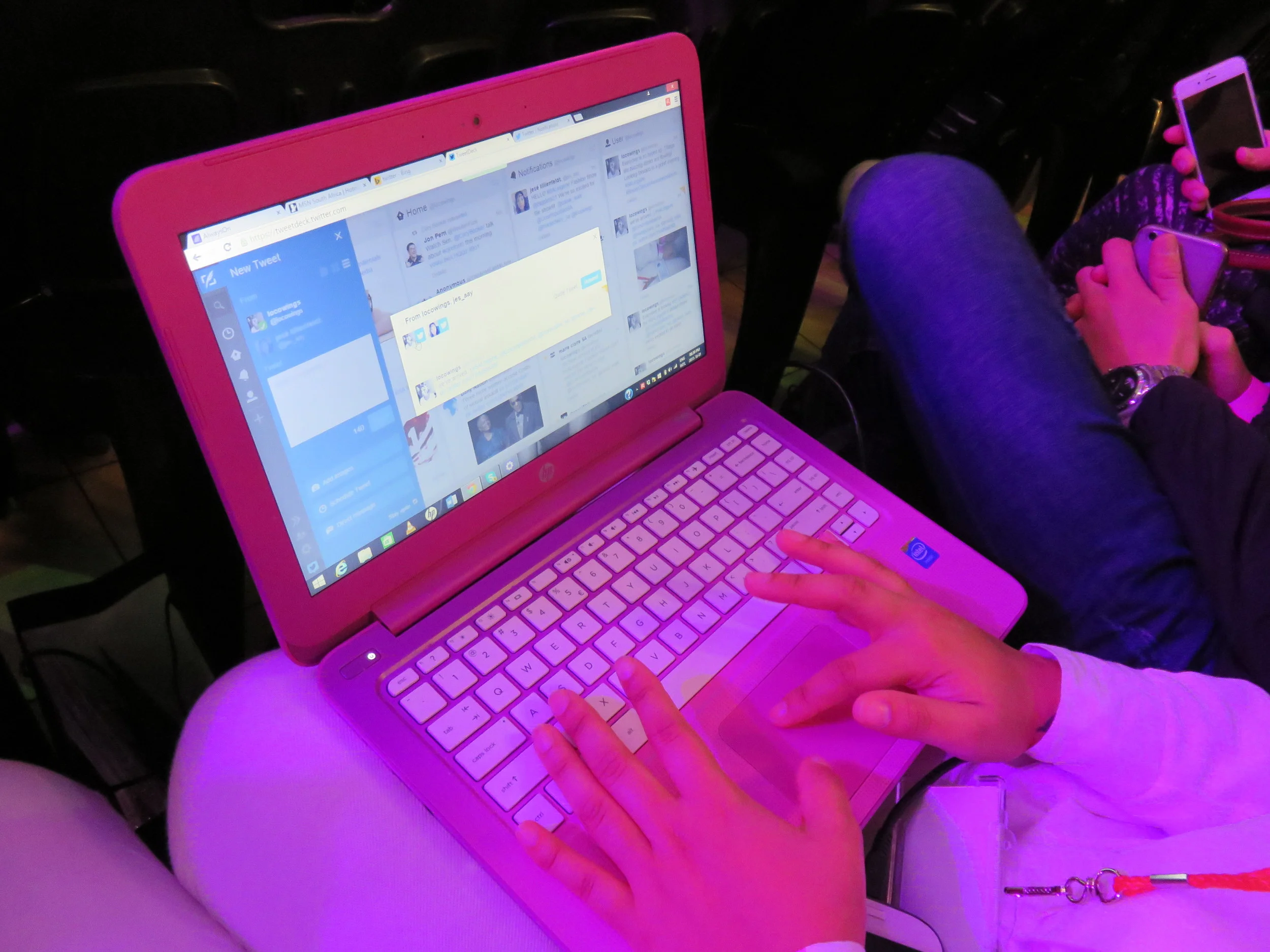
"I've arrived at Canal Walk for the big show, and almost immediately face my first challenge. In fact, setting up your gadgets before you get started is probably the hardest part. This was a turning point for me, where I realised that I needed to get myself a tablet or a device that was less bulky and less of a schlep to have to carry around, instead of using my laptop. Although I thought my decent-sized pink laptop on my lap would be okay, it was a different story with my phone in one hand and Nikon camera in the other.
"I started tweeting about what was happening around me. I wanted to re-create the scenery for those who weren't physically there. This was before the actual show even started! Once the lights were dimmed, I got up with my phone and camera, and tried to get as close to the ramp as possible. Basically, I was snapping pics on my phone and camera at the same time!
"I was tweeting as the night went on, and there was much going on around me! It was overwhelming to say the least, but an experience I wouldn’t trade for anything. Live tweeting is fast paced, and it's hard enough to tweet good content, not to mention remembering to tag the important people involved! It was a good lesson in live tweeting - it isn’t as easy as it looks.
"But I am proud that I tackled it head on and that I came out on top - Canal Walk awarded me a R5,000 voucher for my Twitter coverage! But I definitely learned some lessons were learned. Below is a list of essential things to remember when covering an event live on Twitter.
Live Tweeting Tips
1. Make sure your batteries are all fully charged! That includes your cell phone, laptop/tablet, your camera and all other electronic devices.
2. Always take good pictures. If the quality is bad, don’t even bother! Yes, that means you have got to have a good quality phone as well as camera, and you've gotta wiggle your way into the front row!
3. Make sure that you are in good light for your pictures. If that means you have to sacrifice your seat and stand for the event, do it!
4. Never be shy of tweeting non-stop. It's always better to tweet too much than too little.
5. Keep it up! If you love what you do (tweeting), then everything will come naturally guaranteed! (You might even win a prize!)